Meteora DAMM v2 explained: the low-maintenance pool
What Meteora DAMM v2 pools are, how they differ from DLMM, how fee schedulers and dynamic fees work, and when a wide, low-maintenance position makes sense.
- DAMM v2 pools spread liquidity over a wide price curve — often the whole curve.
- You never go "out of range" in a full-range pool, so there is less to manage.
- Many new-token pools start with a high fee that drops over time (fee scheduler).
- Fees per dollar are usually lower than a tight DLMM range, but so is the effort.
Not everyone wants to babysit price ranges. DAMM v2 (Dynamic Automated Market Maker, version 2) is Meteora's simpler pool type. It works like the classic "x × y = k" pools you may know: the pool always holds both tokens and the price moves smoothly as people trade.
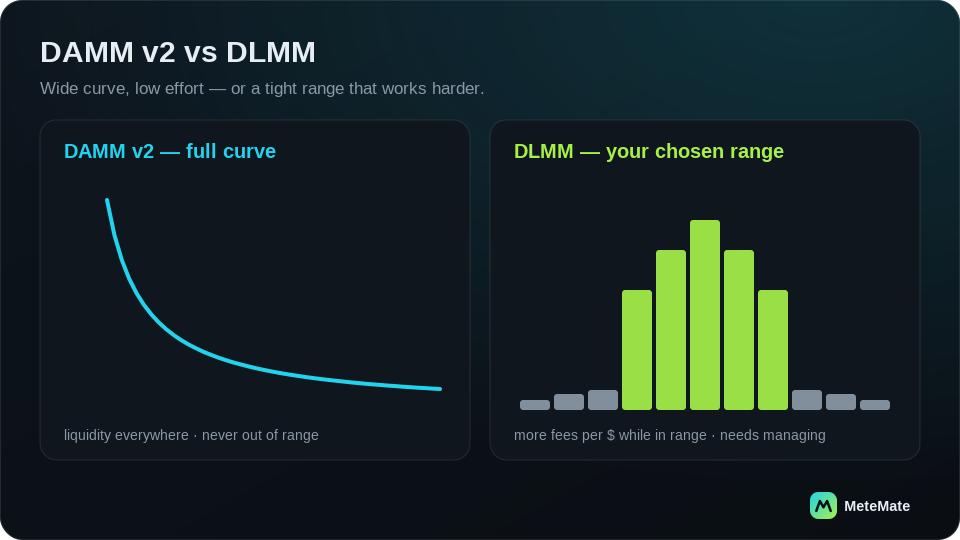
How it differs from DLMM
| DLMM | DAMM v2 | |
|---|---|---|
| Price range | You choose it | Set by the pool (often full range) |
| Out of range? | Yes, often | Rarely or never |
| Fees per $ | High when in range | Lower, spread out |
| Effort | Active | Low |
| Deposit | One or both tokens | Usually both tokens |
Fee scheduler: high fees at launch
Many DAMM v2 pools for brand-new tokens start with a very high fee — sometimes 50% or more — that steps down over minutes or hours. This punishes bots that try to snipe the launch and pays early LPs well. As the fee falls, volume usually rises. MeteMate shows the current fee on every pool card, so you can see where a pool is on its schedule.
Dynamic fee
Some DAMM v2 pools also add a volatility-based fee, just like DLMM: wild price swings push the fee up, calm markets bring it down.
Your position is an NFT
In DAMM v2 your position is represented by a position NFT in your wallet. Do not burn or send it — it is the key to your liquidity. MeteMate reads your DAMM v2 positions straight from the chain and lists them under My Pools.
Claiming fees
Depending on how the pool was created, fees are paid in both tokens or only in the quote token (often SOL). Quote-only fees are handy — you collect SOL without selling the token yourself.
When DAMM v2 is the better choice
- You can't check positions often.
- The token is volatile and a DLMM range would be out of range all the time.
- The pool is fresh and still on a high scheduled fee.
- You believe in the token and are happy to hold both sides for a while.
✅ Quick check
1. You can only check your positions once a day. Which pool type fits better?
2. A fresh DAMM v2 pool shows a 40% fee that is falling every few minutes. What is that?
3. What represents your DAMM v2 position in your wallet?
Questions people ask
What is the difference between DLMM and DAMM v2?
DLMM lets you choose a price range of bins and earns more per dollar while in range, but goes out of range. DAMM v2 spreads liquidity over a wide curve, needs less management and usually earns less per dollar.
What is a fee scheduler in DAMM v2?
A fee scheduler starts a new pool with a high trading fee and lowers it step by step over time. It discourages launch snipers and rewards early liquidity providers.
Can a DAMM v2 position go out of range?
Full-range DAMM v2 positions cannot. Some pools use a limited price range; those can only stop earning if price leaves that wide range.